

Part III - April
Part II - February
Part I - January
NAVIGATING THE 2026 LANDSCAPE
Part III
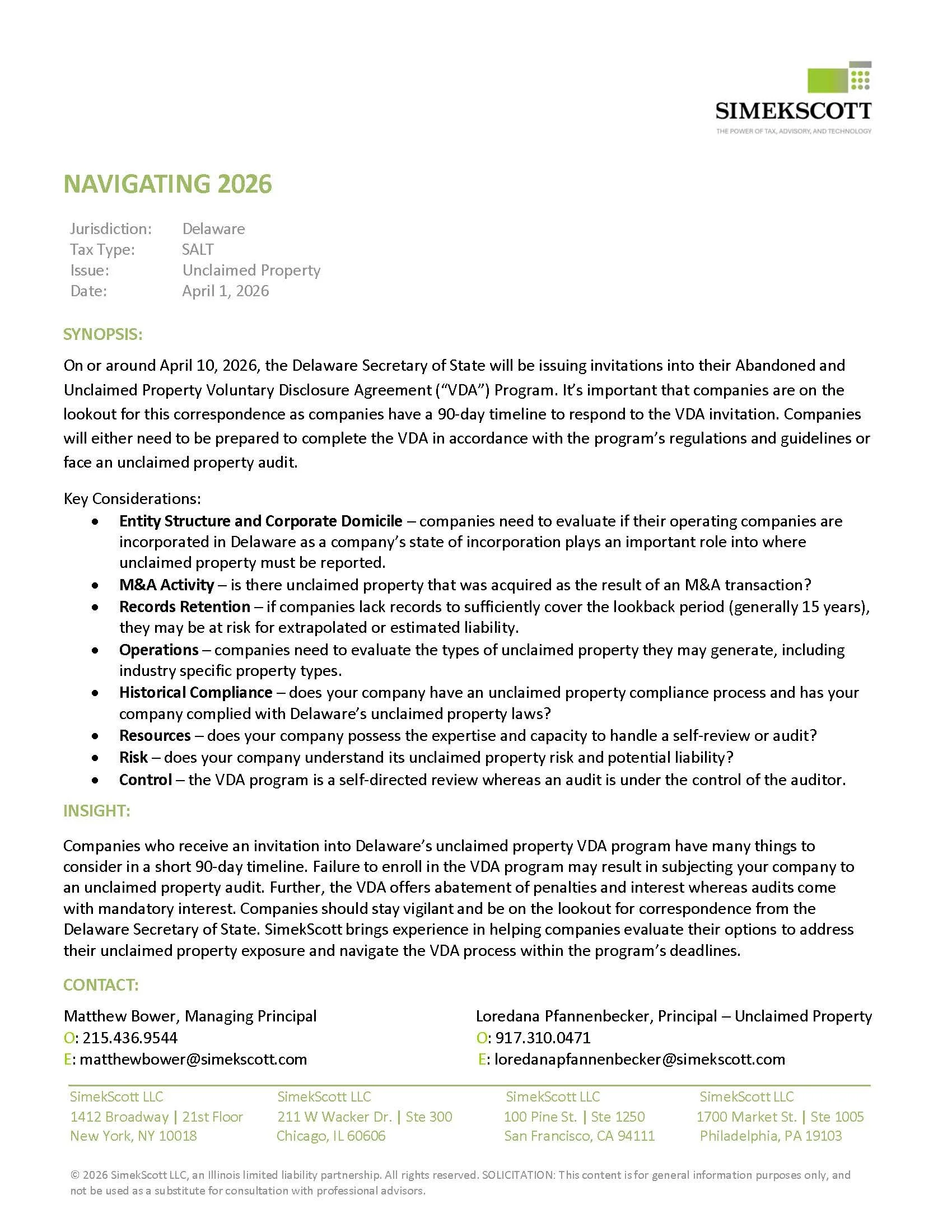
The Delaware Secretary of State is expected to issue invitations to its Abandoned and Unclaimed Property Voluntary Disclosure Agreement (VDA) Program around April 10, 2026—triggering a critical 90-day response window for companies. Organizations must quickly determine whether to enter the VDA program, which offers a structured, self-directed path with potential abatement of penalties and interest, or risk being subject to a formal unclaimed property audit.
This article outlines the key considerations companies should evaluate, including corporate domicile, M&A history, record retention, operational risk areas, and historical compliance. It also highlights the strategic advantages of proactive participation in the VDA program versus the increased cost and loss of control associated with an audit. Download the full article to understand your exposure and how to navigate Delaware’s VDA process effectively.
Part II
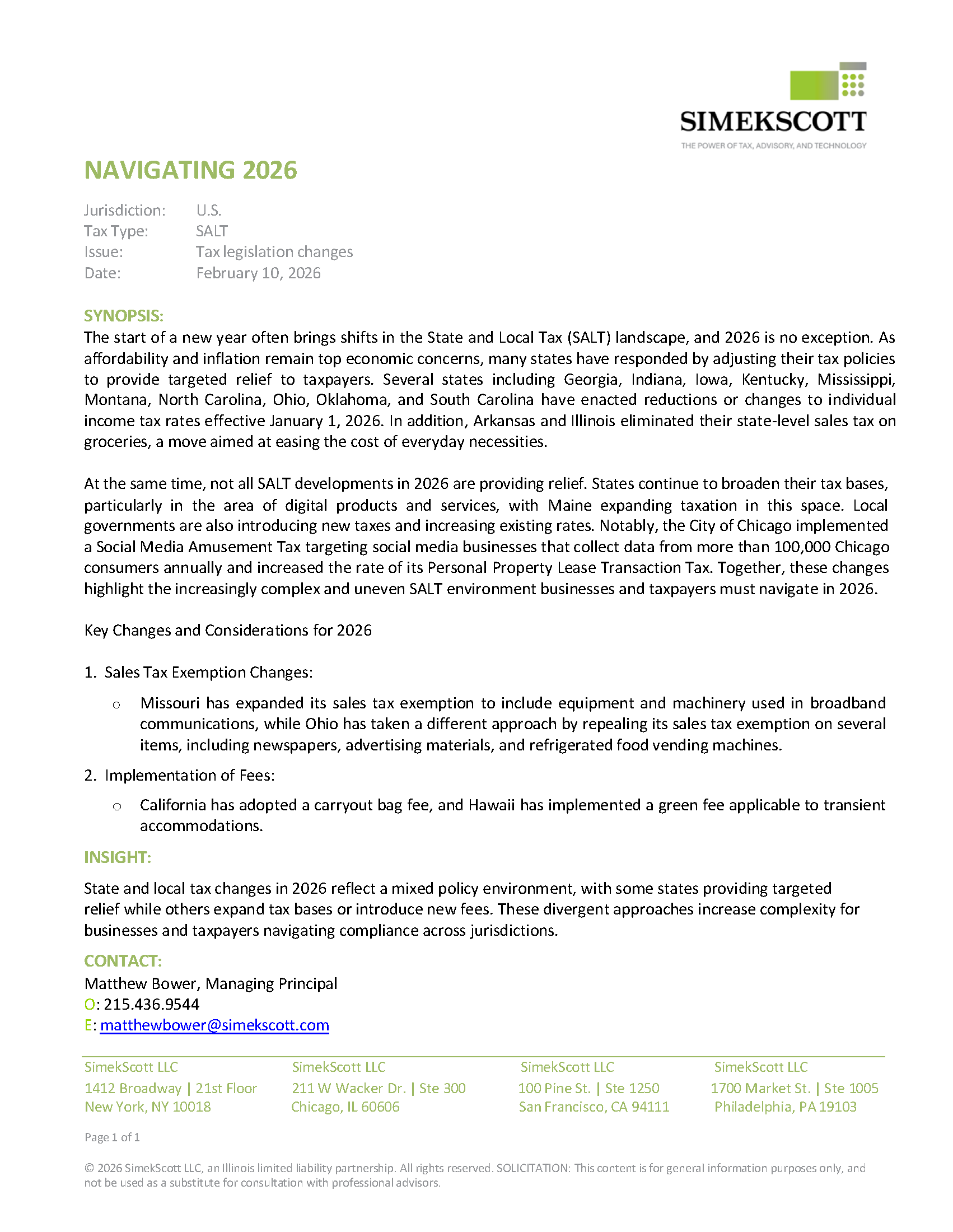
As 2026 begins, state and local tax (SALT) policies across the U.S. are shifting in meaningful—and sometimes conflicting—ways. While many states are responding to affordability and inflation concerns with targeted tax relief, others are expanding tax bases, introducing new fees, or increasing local tax rates.
Recent changes include individual income tax reductions in several states, the elimination of grocery sales taxes in Arkansas and Illinois, and new exemptions aimed at encouraging investment and infrastructure growth. At the same time, expanded taxation of digital products, new environmental and usage-based fees, and higher local taxes—such as Chicago’s new Social Media Amusement Tax—are adding complexity to an already uneven SALT landscape. Together, these developments underscore the need for businesses and taxpayers to stay informed and adaptable in 2026.
Part I
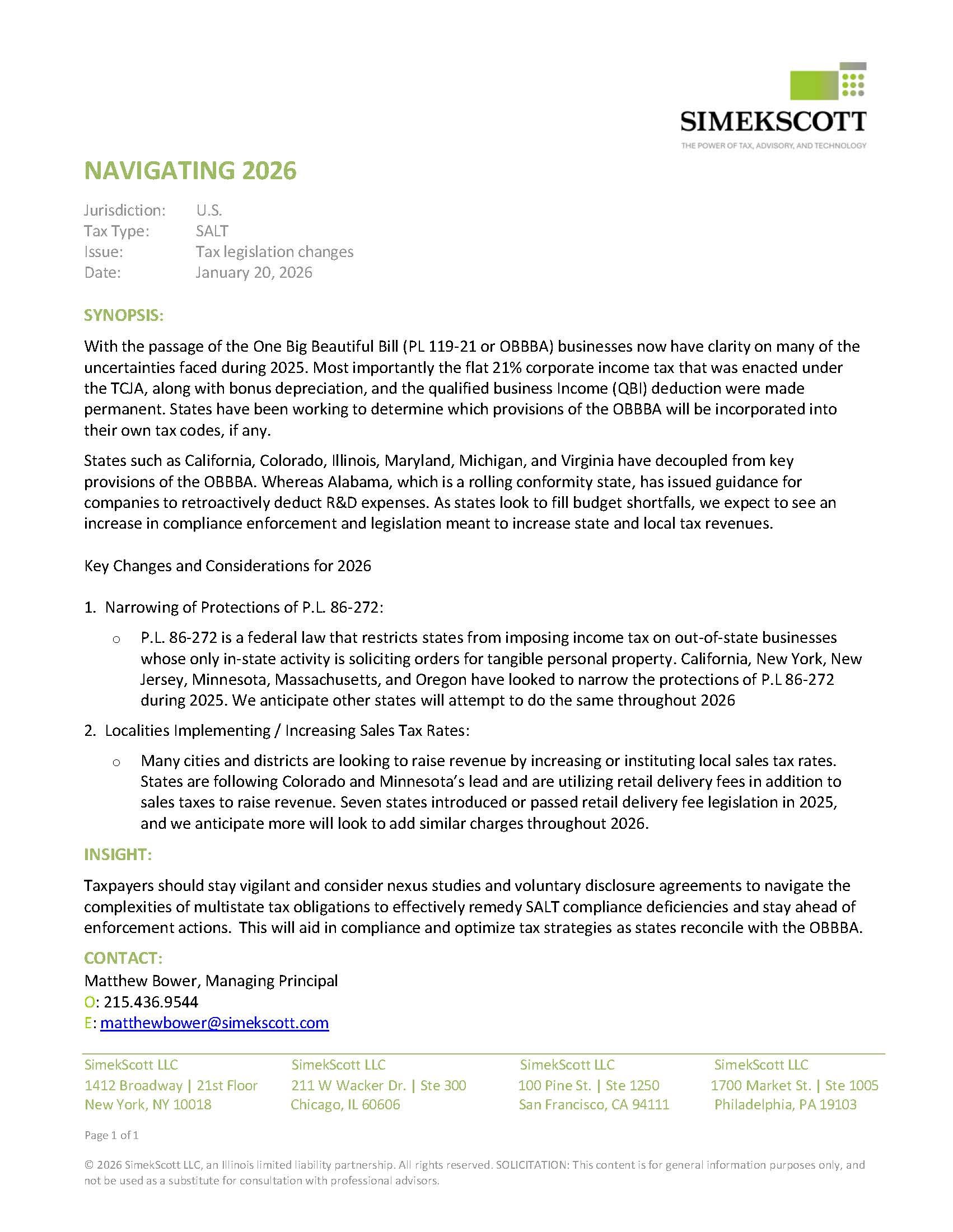
Companies are entering 2026 with a mix of federal tax clarity and growing state-level uncertainty. While the One Big Beautiful Bill provided long-awaited permanence for several cornerstone provisions of the Tax Cuts and Jobs Act—including the 21% corporate income tax rate, bonus depreciation, and the qualified business income deduction—this stability has not fully translated to the state and local level. Many states are reassessing how, or whether, to conform to federal changes, creating a fragmented compliance landscape for companies operating across multiple jurisdictions.
And as states face ongoing budget pressures, businesses should expect heightened scrutiny and policy shifts designed to broaden tax bases and increase enforcement. A growing number of states have begun narrowing the protections of Public Law 86-272, potentially exposing companies to income tax filing obligations in jurisdictions where they previously relied on solicitation-only protections. At the same time, local governments are increasingly turning to sales tax rate increases, new special district taxes, and add-on charges such as retail delivery fees to close revenue gaps, further complicating indirect tax compliance.
In this environment, uncertainty is less about federal rules and more about how aggressively states and localities will assert nexus, interpret conformity, and enforce compliance. Companies that proactively evaluate their multistate footprint—through nexus studies, voluntary disclosure agreements, and ongoing monitoring of legislative developments—will be better positioned to manage risk, avoid unexpected assessments, and align tax strategy with an evolving SALT landscape.